


When cyanobacteria are lysed by viruses (cyanophages), toxins can be released that are critical for drinking water supplies. The CyLys project therefore developed detection methods for cyanobacteria and cyanophages in order to detect the lysis of cyanobacteria at an early stage.
In recent years, blue-green algae blooms have become increasingly common in lakes and reservoirs. These are mass developments of cyanobacteria, which can release toxic substances under certain conditions. The situation becomes particularly critical when cyanobacteria are attacked and destroyed by cyanophages, i.e., viruses that specialize in cyanobacteria. This process, known as lysis, leads to the sudden release of cell contents, including toxins and odor and flavor compounds, which are difficult to remove using conventional drinking water treatment methods.
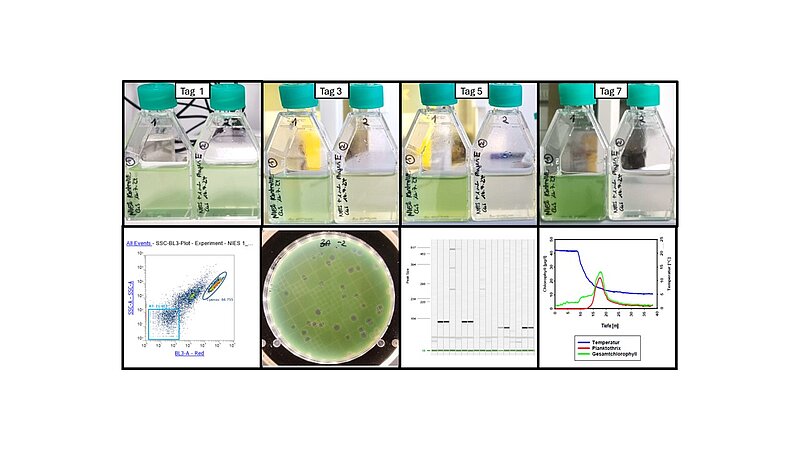
The CyLys research project, carried out by TZW in collaboration with bbe Moldaenke GmbH, aimed to develop detection methods for the early detection of cyanobacterial lysis. The focus was on developing an online measurement method that detects changes in the fluorescence of pigments such as phycocyanin and phycoerythrin. Furthermore, molecular biological and microbiological methods such as quantitative PCR (qPCR), flow cytometry, and plaque assays were developed to detect and quantify cyanobacteria, their toxin genes, and the causative cyanophages. The detection methods developed were applied both in the laboratory and to environmental samples from lakes and reservoirs.
Particular attention was paid to demonstrating the correlation between fluorometric measurements and molecular biological analyses. The combination of both methods allows the detection of lysis processes and provides valuable information about the dynamics of cyanobacterial populations. While changes in fluorescence can provide timely indications of lysis, genetic methods enable the identification and quantification of the microorganisms involved.
The CyLys project represents an important first step toward the development of a monitoring system that will enable water suppliers to detect critical cyanobacterial developments in surface waters at an early stage in the future.