


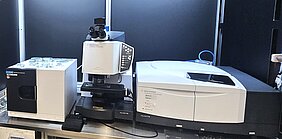
Even though the EU has set standards (Delegated Decision (EU) 2024/1441) for the analysis of microplastics in drinking water samples, implementing this methodology into routine drinking water monitoring remains a major challenge. This is where the Eastern European Interreg research project SafeDRINK comes in; it brings together research institutions, laboratories, water suppliers and authorities from Eastern Europe to establish a standardised, comparable and routine-ready microplastics analysis method for drinking water monitoring in the countries of the project partner – in accordance with the EU Drinking Water Directives. In doing so, the measurement methods established in the individual institutions are brought into line with regulatory requirements and harmonised with one another.Furthermore, stakeholders are involved in the project already at an early stage, so their interests can be considered regarding subsequent method transfer to other laboratories and authorities.
Microplastics are a global issue that is causing concern amongst the public, as they have been detected worldwide both in the environment and in various foodstuffs and drinking water. However, the exact effects on ecosystems and human health cannot be conclusively assessed yet. Due to the lack of harmonisation in microplastics analysis, the measurement data are generally only comparable to a limited extent. Following the publication of Delegated Decision (EU) 2024/1441 (dated 11 March 2024) in the Official Journal of the EU in May 2024, the European Commission has established a methodological framework for the analysis of microplastics in drinking water, which is intended to support microplastic monitoring in accordance with the European Drinking Water Directive ((EU) 2020/2184).
At present, there is a shortage of laboratories with standardised, routine-ready methods and, above all, sufficient technical capacity to analyse microplastics in accordance with the EU requirements for water suppliers. At the same time, water suppliers and authorities rely on uniformly collected measurement data for monitoring purposes. These shortcomings make it difficult to carry out reliable risk assessments and respond quickly to potential contamination.
The European research project SafeDRINK (Interreg Baltic Sea Region) brings together research institutions, water suppliers, companies and authorities from Latvia, Estonia, Poland and Germany to ensure robust, long-term monitoring of microplastics in drinking water across the entire Baltic Sea region. As part of this, monitoring and analysis methods for microplastics are being harmonised and further developed, experts are being trained, and a joint regional database is being created – always in accordance with legislation.
SafeDRINK is establishing a validated, cost-effective and standardised methodology for analysing microplastics in drinking water in the Baltic Sea region. The analytical data obtained in this way enables water suppliers, as well as health and environmental authorities, to make informed statements about the possible presence of microplastics in the drinking water supply and to carry out reliable risk assessments. The results also help water suppliers, authorities and ministries to coordinate cross-border monitoring, further develop and implement regulations, and communicate transparently with the public.
Associated Project Partners:
- Institute of Food Safety, Animal Health and the Environment “BIOR”
- Tallinn University of Technology (TalTech)
- Poznan University of Technology
- Health Board Estonia