TZW: Review

Annual report 2025

Dear reader!

The past year in Germany was marked in particular by discussions about the need for investment in infrastructure. Against this backdrop, we at TZW can be proud that in 2025 we not only took part in these discussions but also actively invested in our infrastructure by purchasing the adjacent office building at our Karlsruhe-Hagsfeld site. This has laid the foundation for continued positive development.

That this development was indeed very positive in 2025 is demonstrated by the renewed increase in revenue to now over € 25.5 million, driven by our expertise in laboratory and testing services as well as numerous technical-scientific projects and research contracts.

Even though national research funding in the water sector is somewhat declining, we have succeeded in acquiring new research projects in related funding areas. It is precisely this creativity and flexibility that sets us apart and will become even more important for our future success.

With this aspiration in mind, we have also embarked on the year 2026.

Facts and figures

0

Research projects

0

Customers

0

Employees

0

Water samples

Turnover development

26 Mio. €

23 Mio. €

20 Mio. €

17 Mio. €

18,7 Mio. €
2021
20,0 Mio. €
2022
21,0 Mio. €
2023
24,8 Mio. €
2024
25,8 Mio. €
2025

Source of funding

  • Testing 44%
  • Research 12%
  • Technical-scientific expertises 44%
2025

Fields of activity

  • Resource protection

    Priorities 2025

    • Risk management in the water supply / Drinking water catchment area ordinance
    • Problem- and area specific monitoring programmes, soil analyses and site inspections
    • Introduction and development of groundwater models for water supply
    • Effects of climate change on the local water supply
    • Groundwater-compatible land management
    • Resilience of the water supply system
    • Software solution RiskPlus


    MORE INFORMATION

  • Environmental biotechnology

    Priorities 2025

    • Electrochemical degradation of PFAS
    • Development of new methods for the detection of antibiotic resistance in the environment
    • Microbiological degradation of trichloroethylene under aerobic conditions without additional auxiliary substrates
    • Natural degradation (ND) of chloroethenes at contaminated sites
    • Degradation of pollutants through a combination of chemical (ISCO) and microbiological treatment
    • Molecular biological methods for monitoring


    MORE INFORMATON

  • Water analysis

    Priorities 2025

    • Analysis of drinking water samples in accordance with legal requirements
    • Analysis of groundwater, surface water and raw water
    • Analysis of municipal and industrial wastewater
    • Determination of ultra-short-chain PFAS in various matrices
    • Analysis of PMT substances (e.g. TFA, amidosulfonic acid, 1,2,4-triazole, 1,4-dioxane, melamine) in water samples
    • Analysis of microplastics in various matrices
    • Specific microbiological detection of indicator organisms or pathogens
    • Analysis of somatic coliphages
    • Quantitative determination of assimilable organic carbon (AOC) by recording bacterial reproduction curves
    • Identification of bacteria with MALDI‑TOF MS


    MORE INFORMATION

  • Micropollutants

    Priorities 2025

    • Development and improvement of trace analysis methods for micro-pollutants for both water samples and solid samples
    • Analysis of water and solid samples for PFAS
    • Studies on the release of PFAS from different matrices
    • Analysis and environmental behaviour of PMT substances (e.g. TFA, amidosulfonic acid, 1,2,4-triazole, and others)
    • Determination of specific groups of substances such as antiscalants (organic phosphonates and polyacrylates), pharmaceutical residues and endocrine disruptors, pesticide active ingredients and metabolites
    • Non-target analysis for trace substance identification
    • Elution tests to determine the release of trace substances from soil or other solid materials
    • Determination of microplastics in various matrices


    MORE INFORMATION

  • Microorganisms

    Priorities 2025

    • Identification of the causes of hygienic-microbiological contaminations in water extraction, water treatment, in tanks, in the drinking water distribution system
    • Preparation of action plans for water supply companies without final disinfection with chlorine or chlorine dioxide
    • Assessment of Aeromonas in drinking water
    • Practical application of microbiological online analysis methods (flow cytometry, enzymatic activity, ATP)
    • Detection of cyanobacteria and their toxins
    • Microbiome analyses to assess biodiversity in water reservoirs
    • Evaluation of the hygienic-microbiological quality of raw water for treatment necessity
    • Analyses of raw water for pathogenic index microorganisms (Campylobacter, viruses, and parasites) and viral indicators (bacteriophages) for quantitative microbial risk assessment (QMRA)
    • Analyses of antibiotic-resistant bacteria and antibiotic resistance genes


    MORE INFORMATION

  • Wastewater and water cycle

    Priorities 2025

    • Detection of SARS CoV-2 and influenza biomarkers in wastewater
    • Extraction of nucleic acids and quantitative measurement using digital droplet PCR (ddPCR)
    • Quantitative detection of RNA in the context of wastewater-based epidemiology
    • Water reuse
    • Removal of microbiological contamination during the treatment and reuse of wastewater
    • Elimination of antibiotic resistance and viruses during further wastewater treatment
    • Passive Samplers for Detection of SARS-CoV-2 and Antibiotic Resistances


    MORE INFORMATION

  • Testing of materials and products

    Priorities 2025

    • Type tests and monitoring tests in accordance to Evaluation criteria document for plastics and other organic materials in contact with drinking water (KTW-BWGL)
    • Initial inspections and surveillance audits on behalf of DVGW CERT as part of 1+ certifications
    • Collaboration in groups for the preparation of the supporting document within the EU-DWD
    • Product monitoring at manufacturers
    • Testing of pipes and fittings
    • Testing of products in water distribution and drinking water installations 
    • Testing of devices for water treatment in domestic installations (e.g. softening systems)
    • Testing of UV devices, sensors and UV LED technology


    MORE INFORMATION

  • Concepts for supply structures and technology

    Priorities 2025

    • Structural and supply concepts adapted to changing conditions such as climate change or demographic developments
    • Optimisation of existing treatment processes with regard to energy and resource efficiency
    • Pilot plants for treatment processes and technology concepts
    • Treatment of saline retentate from reverse osmosis plants
    • Removal of PFAS in consideration of new drinking water limits
    • Scientific support for extended efficacy tests of new treatment materials


    MORE INFORMATION

  • Asset management and infrastructure

    Priorities 2025

    • Camera inspection of drinking water pipes
    • Development and implementation of the condition-orientated flushing strategy
    • Identification of water losses by analysing water demand data using specific algorithms
    • Development of optimised maintenance strategies based on in-situ corrosion measurements and systematic pipe network flushing
    • Ensuring water quality in the drinking water installation through optimised operation of the installation
    • Structural and supply concepts adapted to changing conditions such as climate change or demographic developments
    • Condition assessment of valves in drinking water networks
    • Heat extraction from drinking water
    • Risk management for distribution systems

    MORE INFORMATION

  • Digitalisation and management

    Priorities 2025

    • Software solution for risk management (RiskPlus)
    • Software solution for short-term drinking water demand prognosis (PrognEAU)
    • Software solution for classifying the drinking water relevance of trace substances and potential measures for risk management (R&D subproject HOT-TARGET)
    • Software solution for rapid identification of microbiological organisms relevant to drinking water using MALDI-TOF analysis (R&D subproject BAK-IDENT)
    • Software solution for evaluating data from non-target analysis (R&D project K2I-Xplore)
    • Software solution for predictive maintenance of large-scale reverse osmosis systems (R&D project TRINK-PREDICT)
    • Operation of databases for up to 1,200 water utilities on the occurrence of pesticides and their metabolites, including assessment
    • Climate stress test for the public water supply in Thüringen (federal state of Germany) 
    • Videos and hybrid formats for knowledge transfer


    MORE INFORMATION

Projects completed in 2025

Roads flooded with water
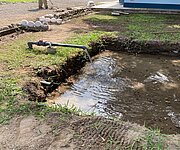
Flooded roads, RRR-project
A transnational strategy extending the role of roads to support rural water systems (Rural_Roadwater_Rescue)

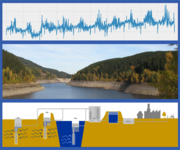
Roads and highways are crossing the north-west-European (NWE) territory abundantly. They usually drain the runoff water from rainfall events swiftly to canals/rivers, whereas local stakeholders would urgently need this surplus water. Rural_Roadwater_Rescue (RRR) demonstrated an actionable strategy how to save, treat (clean) and locally distribute water through transformation of existing roads/highways.

Adaptation strategies of the public water supply to extreme climatic events (TrinkXtrem)

To improve the resilience of public water supply to extreme events, the TrinkXtrem research project developed four software tools and nine methods and concepts which were applied in model regions. The entire water supply process chain, from raw water intake to drinking water distribution, was addressed.

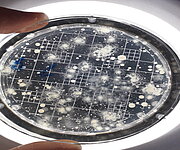
Bacterial colonies an low nutrient agar plate
Cultivation of previously uncultivated microorganisms from various aquatic habitats (MultiKulti)

In the BMFTR MultiKulti project, a versatile cultivation system was built and tested for previously uncultivated microorganisms from hard-to-reach locations. Online systems were used to monitor microbial growth.

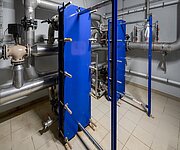
Plate heat exchanger
Plate heat exchanger Source: shutterstock
Heat utilisation from drinking water distribution networks (heat extraction)

The "Heat extraction" research project is investigating the utilisation of heat from drinking water distribution networks in order to review the current state of knowledge and experience.

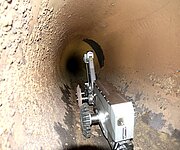
Crawler for inspection inside a drinking water pipe
Optical-acoustic inspection of drinking water distribution systems (OptInspekt)

In the OptInspekt project, three different optical inspection systems were systematically tested in the drinking water sector. The aim was to evaluate their limits of application, their practical suitability, and the quality of the data obtained under real conditions.

Nanofiltration using hollow‑fiber membranes for PFAS elimination
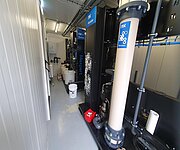
PFAS removal using nanofiltration (KapillO-PFAS)

Pilot studies using hollow fiber nanofiltration membranes to determine the PFAS removal depending on water composition and operation conditions.

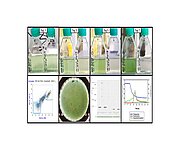
Phage lysis in the laboratory and detection by flow cytometry, plaque assay, qPCR, and fluorescence measurement.
Protection of water supplies through detection of cyanobacterial lysis (CyLys)

When cyanobacteria are lysed by viruses (cyanophages), toxins can be released that are critical for drinking water supplies. The CyLys project therefore developed detection methods for cyanobacteria and cyanophages in order to detect the lysis of cyanobacteria at an early stage.

Brunnen mit fließendem Wasser
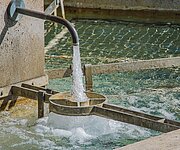
Water supply is facing great challenges (JuergenM on Pixabay)
Resilience in water supply (ResilJetzt!)

Regional temporary shortages and climate impact assessments are making it increasingly clear that local to supraregional adaptation strategies are necessary for water supply. The ResilJetzt! project therefore examined the status quo and identified resilience options for adapting water supply to challenges such as those posed by climate change.

Precipitation monitoring on TFA by TZW (Image: Shutterstock)
Trifluoroacetic Acid – Possible Consequences of a Change in Regulation (TFA-Trink)

A toxicologically based drinking water guideline value of 60 µg/L currently applies to TFA in drinking water. However, further toxicological data presented in 2024 could lead to a reassessment. As part of the “TFA-Trink” project, the following was conducted: an assessment of the impact on the German drinking water supply of introducing a limit value or reducing the currently applicable guideline value for TFA based on toxicological considerations; an evaluation of the technical treatment options…

Water reuse and drinking water reservoirs on trial (FLEXITILITY)

What does a flexible and climate-resilient water supply look like in the future? This question was investigated in the Flexitility project. During the implementation phase of the project, the TZW team and research partners focused specifically on the impact of decentralized drinking water storage.

International projects

Zero Pollution of Persistent, Mobile substances (ZeroPM)

Persistent, mobile (PM) substances are being recognized as serious threats to the safety of water resources. In many cases, drinking water supplies have to be purified using expensive technologies because of contamination by PM substances. The most famous example of PM substances are per- and polyfluoroalkyl substances (PFAS), but there are numerous others. This worldwide problem has triggered new policy and monitoring actions and the European Green Deal contains a broad initiative for chemical…

Infiltration pond in Lima, Peru
Water Reuse applying MAR and membrane treatment (NEWA2)

The NEWA2 research project will use demonstration plants to investigate managed aquifer recharge (MAR) and solar-based membrane technology in order to evaluate possibilities for indirect and direct water reuse and their contribution to alleviating local water shortages.

Sustainable and climate adapted Water Management in Mining in Southern African Regions (WASA)

As part of WaMiSAR, TZW is investigating microbial processes in groundwater contaminated by mining activities in Southern African regions. The focus is on bacterial sulphate reduction and heavy metal immobilisation.

Water treatment in sewage treatment plant
German-Israeli project for advanced wastewater treatment (ELARIA)

This research project will provide reliable data on additional wastewater treatment steps for the elimination of antibiotic resistance and health-related microbiological parameters.

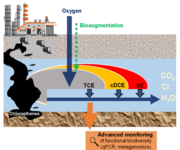
Stimulation of aerobic TCE, cDCE and VC degradation with oxygen
Bioaugmentation and biostimulation for the remediation of chloroethene-contaminated groundwater (ChloroBioRem)

Together with experts in metagenome analyses from China, the functional biodiversity of chloroethene degradation under oxidising conditions is investigated. Optimised groundwater remediation concepts and innovative monitoring methods are developed.

Organisation


6 Departments

View our organisation chart


46 Publications

View our publications


121 Committees with TZW experts

View the list of committees