

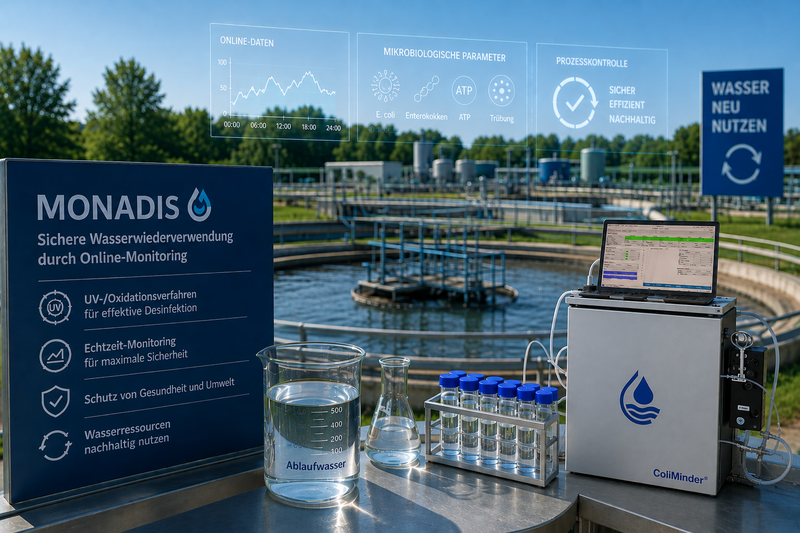
The German-Israeli water technology project MONADIS combines online monitoring with UV and oxidation-based disinfection processes to enable safe, efficient, and sustainable water reuse while ensuring high microbiological water quality.
As water scarcity intensifies due to climate change, population growth, and increasing water demand, water reuse is becoming an essential component of sustainable water management. Treated wastewater can serve as a valuable alternative water resource for agricultural irrigation, groundwater recharge, and industrial applications. However, safe water reuse requires reliable control of microbiological water quality to minimize risks associated with pathogens, fecal indicator organisms, antibiotic-resistant bacteria, and antibiotic resistance genes.
The German-Israeli research project MONADIS addresses these challenges through an integrated approach that combines advanced disinfection technologies with innovative real-time microbiological monitoring. The project aims to improve the safety, efficiency, and sustainability of treated wastewater reuse while reducing energy and resource consumption.
A key focus of MONADIS is the development and evaluation of innovative, energy-efficient disinfection strategies for treated wastewater. Researchers are investigating UV-LED systems operating at different wavelengths as well as oxidation-based disinfection methods including ozone, chlorine, chlorine dioxide, and hydrogen peroxide. Particular attention is given to combined treatment processes that maximize microbial inactivation while minimizing operational impacts. These treatment trains are designed to effectively inactivate microorganisms, damage antibiotic resistance genes, reduce microbial regrowth, and limit the formation of undesirable disinfection by-products.
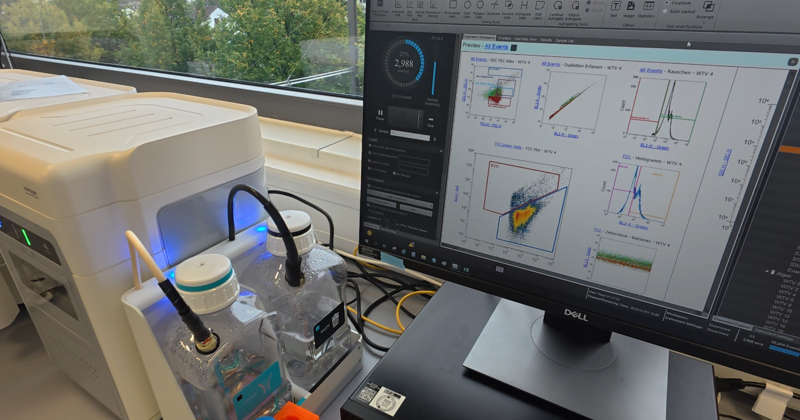
In parallel, MONADIS is advancing technologies for the real-time monitoring of microbiological water quality. Conventional sampling methods provide only snapshot information, whereas continuous monitoring allows for more responsive and data-driven process control. The project evaluates advanced monitoring tools including flow cytometry, enzymatic online monitoring systems such as ColiMinder, ATP measurements, and a further-developed sensor concept based on tryptophan fluorescence. These technologies generate continuous data streams that can support dynamic treatment optimization, early detection of operational disturbances, and comprehensive documentation of effluent water quality.
The microbiological investigations encompass both traditional culture-based methods and state-of-the-art molecular biological techniques, including qPCR-based analyses. In addition, the project examines microbial regrowth following UV and oxidation treatments, the influence of residual disinfectant concentrations, and the occurrence of antifungal-resistant fungi in selected wastewater streams.
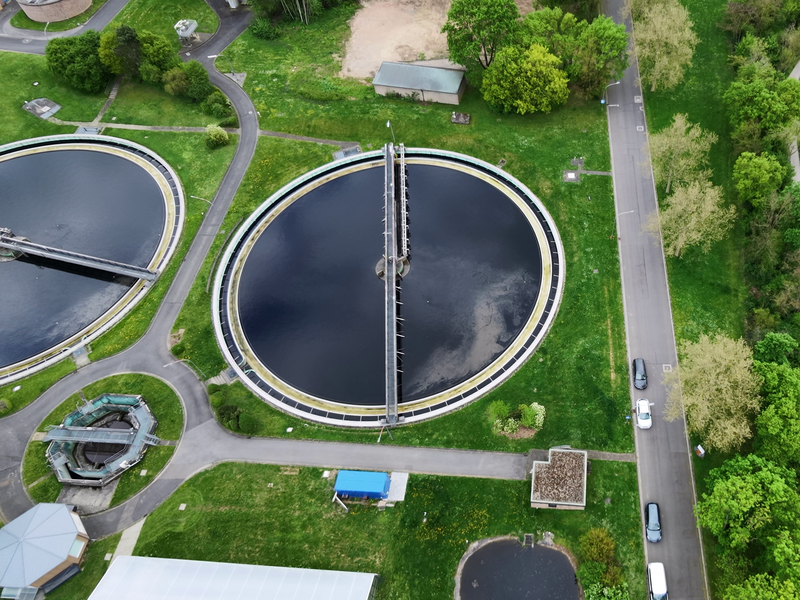
Research activities are conducted across laboratory, pilot-scale, and demonstration-scale systems and are complemented by studies under real operating conditions at wastewater treatment plants in Germany and Israel. This combination of controlled experimentation and practical field validation ensures that scientific findings can be effectively translated into real-world wastewater treatment and water reuse applications.
MONADIS provides valuable scientific evidence and decision-support tools for wastewater utilities, regulatory authorities, technology providers, and engineering consultants. Project outcomes will contribute to recommendations for effective disinfection and monitoring strategies and support the implementation of European requirements for safe water reuse. In the long term, MONADIS will help improve resource efficiency, reduce risks related to microbial contamination and antimicrobial resistance, and promote resilient, adaptable, and sustainable water reuse systems.
Publications
Ho, J.; Stange, C.; Diadko, D.; Eghbaria, Y.; Nasser, A.; Tiehm, A. (2025): Elimination of antibiotic resistances, pathogens and faecal indicators in advanced wastewater treatment. In: 22nd Health Related Water Microbiology Conference (HRWM), Amersfoort, the Netherlands, 15.-20. June 2025, Book of abstracts, Oral Presentation
Nasser, A.; Eghbaria, Y.; Stange, C., Tiehm, A. (2025): Combined disinfection processes for the reduction of microbial indicators and antibiotic resistant genes from wastewater effluents.
In: 22nd Health Related Water Microbiology Conference (HRWM), Amersfoort, the Netherlands, 15.-20. June 2025, Book of abstracts, Oral Presentation
Sauter, D.; Stange, C.; Schumacher, V.; Tiehm, A.; Gnirss, R.; Wintgens, T (2021): Impact of ozonation and biological post-treatment of municipal wastewater on microbiological quality parameters.
Environmental Science Water Research & Technology 7, 9: 1643–1656, DOI: 10.1039/D1EW00312G
Ho, J.; Schweikart, C.; Stange, C.; Tiehm, A.; Ahmadi, J.; Thiel, M.; Aumeier, B.; Drewes, J.E.; Buettner, M.; Scheyer, N.; Baumann, L. (2026):
Mikrobiologische Barrierewirkung moderner Wasserwiederverwendungs-systeme zur mikrobiologischen Sicherheit bewässerter Pflanzen
In: Gewässerschutz - Wasser - Abwasser (GWA) 261 51/1-51/9
Ho, J.; Ahmadi, J.; Stange, C.; Schweikart, C.; Drewes, J.E.; Tiehm, A. (2025): Microbial safety and antibiotic resistance of crops after irrigation with reclaimed water. Water Reuse 15 (2), 300–318, DOI: 10.2166/wrd.2025.030
Ho, J.; Ahmadi, J.; Schweikart, C.; Hübner, U.; Schwaller, C.; Tiehm. A.; Drewes, J.E. (2024): Assuring reclaimed water quality using a multi-barrier treatment train according to the new EU non-potable water reuse regulation. Water Research 267: 122429, DOI: 10.1016/j.watres.2024.122429
Hügler, M. (2026): Neue Online-Analysesysteme zur betrieblichen Überwachung der Trinkwasser-aufbereitung. In: Gewässerschutz - Wasser - Abwasser (GWA) 261 48/1-48/8
Hügler, M. Gawriltschuk, G.; Packroff, G. (2025): Einsatz mikrobiologischer Online-Analysesysteme in der Wasserpraxis. gwf-Wasser | Abwasser international 10/2025: Seiten 75 – 82