


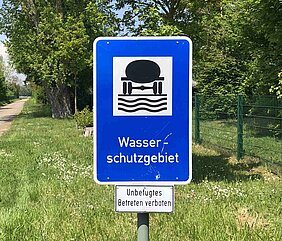
A clearer picture of catchment risks, a stronger evidence base and more targeted investigations: early experience with Germany’s Drinking Water Catchment Ordinance (TrinkwEGV) demonstrates the benefits that systematic risk management can offer water utilities.
The initial implementation phase of the Drinking Water Catchment Ordinance presented many water utilities with considerable challenges. Under significant time pressure, they had to bring together data from different sources, document operational knowledge and experience, and assess risks at different locations within their catchments. Smaller utilities in particular had limited staff capacity and specialist expertise available for this work.
During the first assessment cycle, more than 400 operators used the RiskPlus software, developed by TZW: DVGW-Technologiezentrum Wasser and Disy Informationssysteme GmbH. Together, these operators account for around a quarter of the water abstracted for public supply in Germany. Their experience spans a wide range of utility sizes, abstraction methods and catchment characteristics. Around 130 catchments were assessed with support from TZW.
Identifying risks and bringing knowledge together
A nationwide user survey conducted in spring 2026 found that around 92 percent of respondents saw benefits in catchment risk management. More than half identified risks that had previously been unknown or had not been systematically recorded. An improved evidence base is likely to have contributed to this: the majority reported that, on request, the relevant authorities had provided information about their catchments that had previously been unknown or inaccessible to them.
Participants highlighted a better understanding of their catchments, the consolidation of information in one place, and a clear, traceable basis for planning measures and investigations as particular advantages. The shared evidence base also facilitates dialogue with authorities and other stakeholders.
From assessment to operational use
Implementation at Stadtwerke Memmingen, for example, illustrates how the findings can be put to practical use. There, consistent digital documentation was created for twelve catchments, and the findings have already informed the planning of inspection visits. In Dresden, assessments of groundwater abstraction sites influenced by bank filtration also took account of relevant hazards within the Elbe’s surface water catchment.
Combining a consistent methodology with spatial analysis and staff’s local knowledge proved crucial. Digital tools help to structure and document the work; expert assessment of local conditions remains essential.
Long-term water resource protection now depends on keeping data up to date, refining monitoring programmes and implementing measures. The effectiveness of the TrinkwEGV in protecting water resources can only be assessed once the relevant authorities have reviewed the submitted documentation and the necessary measures have been implemented. Although the user survey is not representative of all German water utilities, the findings demonstrate how an initial assessment can provide a lasting foundation for ongoing work.
The full technical article, “Experience of implementing the Drinking Water Catchment Ordinance – challenges, approaches and findings”, was published in issue 11/2026 of DVGW energie | wasser-praxis (PDF) (only in German).